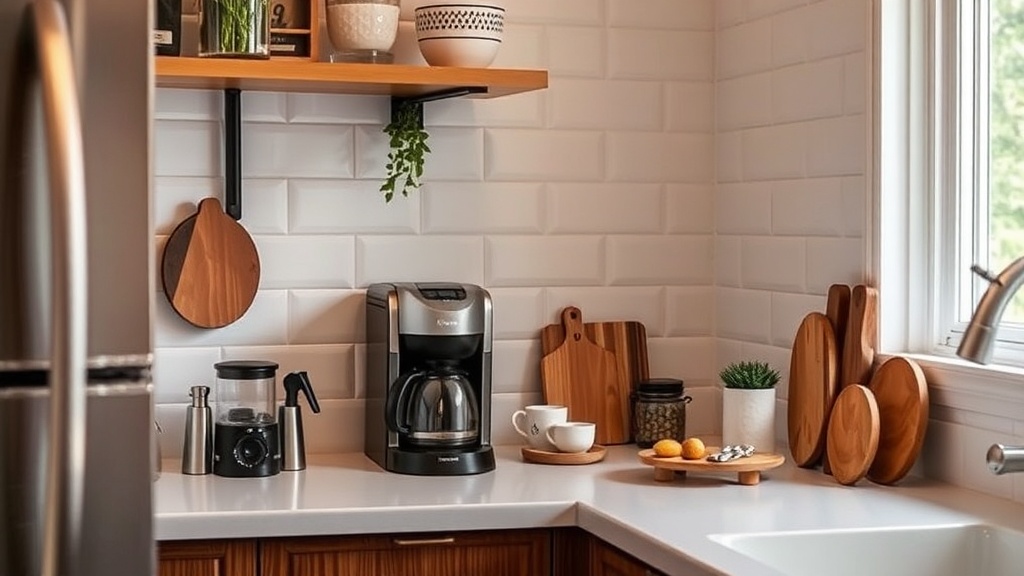
Creating a Functional Coffee Station in a Tiny Kitchen Corner

Imagine a person reaching for a coffee mug, only to knock over a sugar bowl, a spoon, and a half-empty bag of coffee grounds because everything is scattered across a tiny, two-foot section of the kitchen counter. It's a mess. This guide shows you how to turn a cramped corner into a dedicated, organized coffee station that saves space and looks intentional.
Small kitchens often suffer from "countertop creep," where appliances slowly take over every available inch. A coffee station isn't just about having a machine; it's about creating a zone that keeps your caffeine ritual from cluttering your prep space. We're looking at how to group your gear, manage your vertical space, and keep your beans fresh without needing a massive kitchen island.
How Much Space Do You Need for a Coffee Station?
A functional coffee station requires at least 12 to 18 inches of width and a depth that accommodates your specific machine. Most standard coffee makers, like a Keurig or a Nespresso Vertuo, won't take up much more than a foot of counter depth. However, if you're using a bulky espresso machine, you'll need to account for the extra footprint and the clearance needed to pour water into the reservoir.
Don't forget about the "splash zone." You need enough room in front of the machine so you aren't bumping into the backsplash or other appliances while you're working. If your kitchen is particularly tight, consider using a small rolling cart or a tiered tray to define the area. This keeps the coffee supplies from bleeding into your food prep zone.
If you're working with a tiny apartment, you might want to look at kitchen cabinet layouts to see how you can tuck your station into a corner rather than leaving it out on the main counter. Sometimes, a corner is actually better because it's out of the main flow of traffic.
What Are the Best Ways to Organize Coffee Supplies?
The best way to organize coffee supplies is to group your items by frequency of use and height. You want your most-used items—like your favorite mug or your daily coffee beans—within easy reach, while less frequent items like seasonal syrups or extra filters stay tucked away. This prevents the "clutter pile-up" that happens when you're searching for a spoon at 6:00 AM.
Here are three ways to categorize your gear:
- The Daily Essentials: Your coffee maker, one or two favorite mugs, and your primary coffee source (beans, pods, or grounds).
- The Flavor Station: Syrups, sweeteners, and spices like cinnamon or cocoa powder.
- The Maintenance Kit: Cleaning supplies for your machine, extra water, and replacement filters.
I've found that using clear containers is a lifesaver. When you can see exactly how much sugar or coffee you have left, you won't be surprised by an empty jar mid-brew. Using a glass jar for coffee beans isn't just aesthetic; it also helps with airtight storage if you get the right lid. If you're feeling ambitious, you can even look into using vertical surface area to expand your living space by adding a small floating shelf above your station.
It's also worth noting that a tray can act as a "boundary." A simple wooden or marble tray keeps your syrups from leaving sticky rings on your countertop. It's a small detail, but it makes the station look like a design choice rather than a pile of stuff.
Comparison of Storage Methods
| Storage Method | Pros | Cons |
|---|---|---|
| Tiered Trays | Great for verticality; looks high-end. | Can be unstable if top-heavy. |
| Airtight Jars | Keeps coffee fresh; looks uniform. | Requires more countertop space. |
| Drawer Organizers | Hides the mess completely. | Harder to access during a rush. |
| Wall-Mounted Racks | Zero countertop footprint. | Requires drilling into the wall. |
How Do I Maximize Space in a Tiny Kitchen Corner?
You maximize space by utilizing vertical height and grouping small items into single, contained units. Instead of having five different small jars scattered around, put them all on one elevated stand. This keeps the "visual noise" low and leaves more room for actual cooking.
One of my favorite tricks is the "stacking" method. If you have a coffee maker that is relatively short, you can place a small shelf or a riser above it to hold your syrups or pods. This uses the air above the machine instead of the precious counter space next to it. If you're worried about stability, just ensure the riser is heavy-duty and won't tip over when you're moving things around.
Another option is to use a wall-mounted approach. A small pegboard or a magnetic strip can hold your metal spoons or even small metal tins. This is a great way to get things off the counter entirely. It's a clever way to keep your station functional without the clutter. If you've already mastered your kitchen, you might want to look at 10 genius small-space hacks that will double your storage to see how this applies to other parts of your home.
Don't overlook the power of a coffee station cart. If your kitchen is truly tiny, a small, narrow cart (like those from IKEA or Target) can act as a mobile station. You can roll it into a corner when you're making coffee and tuck it away when you need to prep dinner. This gives you a dedicated zone that doesn't permanently occupy your main workspace.
One thing to watch out for is the power cord. A messy cord can make a tiny station look even more cluttered. I usually use a small cord organizer or a clip to keep the wire tucked neatly behind the machine. It's a tiny fix, but it makes a massive difference in how "finished" the station looks.
If you have a lot of different flavors or milk options, consider a small, single-serve creamer fridge or a dedicated container. Keeping your milk and cream in a consistent spot prevents you from running across the kitchen halfway through your brew. It keeps the routine smooth and predictable.
Lastly, think about your lighting. A small, battery-operated LED light or a tiny lamp near your station can make that corner feel like a cozy nook rather than just a cramped corner of the kitchen. It adds a bit of warmth and makes the whole area feel intentional. It's about creating a vibe, not just a place to put a machine.