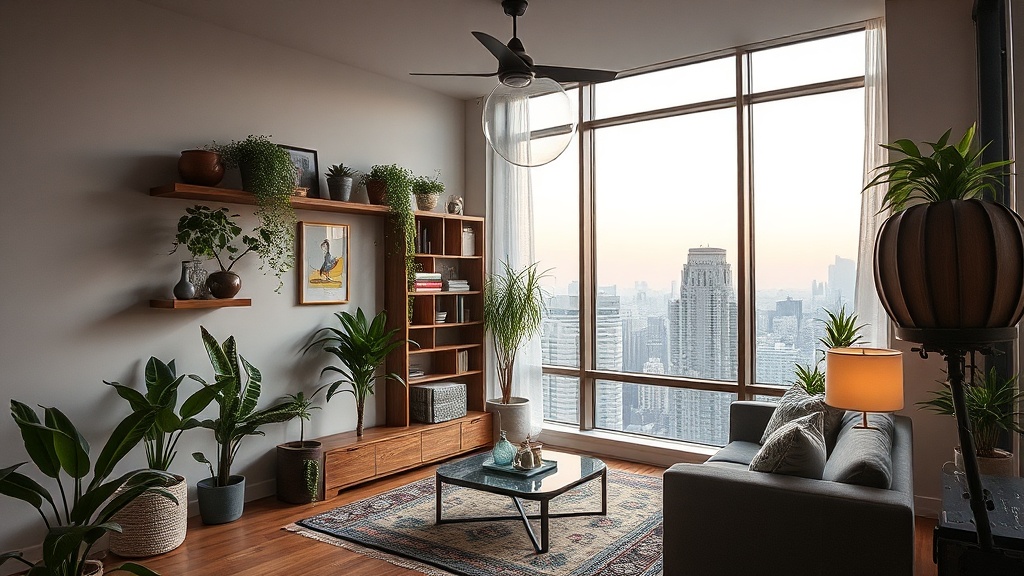
Using Vertical Surface Area to Expand Your Living Space

This guide explains how to reclaim floor space by moving your storage and decor to your walls, ceilings, and doors. You'll learn how to identify underused vertical surfaces, which storage tools work best for different weight loads, and how to avoid the common mistake of making a small room feel cluttered by over-decorating the walls.
Why should you use vertical space in a small room?
Vertical space provides a massive amount of untapped storage that doesn't subtract from your walkable floor area. Most people focus entirely on square footage—the floor—but in a small apartment or a compact home, the walls are your most valuable asset. By moving items like books, kitchenware, or even shoes from the floor to the walls, you create a sense of openness.
Think about a standard bookshelf. It takes up a significant footprint. Now, imagine a wall-mounted rail system or floating shelves instead. You get the same storage capacity without the heavy base sitting on your rug. It's a simple shift in perspective that changes how a room feels.
The goal isn't just to "add more stuff." It's to get the stuff off the ground. When your floor is clear, the room feels larger and easier to clean. Plus, it's much easier to vacuum around a wall-mounted pegboard than a bulky cabinet.
What are the best ways to organize a small kitchen?
Wall-mounted rails and magnetic strips are the most effective ways to organize a small kitchen. Instead of cluttering your countertops with spice jars or knife blocks, you can move those items to the vertical plane. This leaves your prep area open for actual cooking.
Here are a few specific ways to implement this:
- Magnetic Knife Strips: Use a heavy-duty magnetic strip like those from Wilton or OXO to keep knives safely away from fingers and off the counter.
- Pegboards: A metal or wooden pegboard (the kind you see in workshops) is a lifesaver. You can hang measuring cups, small strainers, and even lightweight pans.
- Over-the-Sink Rails: These allow you to hang drying racks or even small baskets for sponges right above the sink area.
- Magnetic Spice Tins: If you have a metal backsplash or a side of the fridge, use magnetic tins to free up cabinet space.
One thing to watch out for: don't go too heavy. If you're mounting something to a drywall surface, make sure you use sturdy anchors. You don't want your expensive ceramic mugs falling because of a weak screw. If you aren't sure about your wall type, check the Wikipedia entry on wall anchors to understand the difference between plastic plugs and heavy-duty toggles.
If your kitchen feels overwhelming, you might need to address the clutter first. I often suggest looking at the one rule for decluttering small spaces before you start buying new shelves. There's no point in finding a "place" for items you don't actually need.
How can I add storage to a bedroom or closet?
Using the back of doors and the space above doors is the fastest way to add storage to a bedroom without losing a single inch of floor space. Doors are often "dead zones" where nothing happens, but they are actually prime real estate for organization.
For a bedroom, I highly recommend over-the-door organizers. They aren't just for shoes anymore. You can use clear pocket organizers for jewelry, hair accessories, or even electronics like chargers and cables. It keeps these small, easily lost items in one place and out of your desk drawers.
The Door Organizer Comparison
| Organizer Type | Best For... | Pros | Cons |
|---|---|---|---|
| Clear Pocket Organizer | Jewelry, hair ties, small electronics | Visual access to items | Can look messy if not neat |
| Shoe Organizer | Shoes, rolled-up scarves, small toys | Very sturdy | Usually opaque/hard to see inside |
| Hook Strips | Hats, bags, light jackets | Minimalist look | Limited storage capacity |
Don't forget the space above your door frame. If you have a high ceiling, a single shelf installed just above the door can hold items you rarely use, like seasonal decorations or out-of-season clothing. It's a hidden area that most people completely ignore.
What are the best vertical storage tools for a home office?
Floating shelves and wall-mounted desk organizers are the best tools for keeping a workspace functional and tidy. A desk is often a magnet for paper clutter and loose pens. If you can move those items to the wall, your desk becomes a place for work rather than a graveyard for mail.
I've used IKEA Skådis pegboards in several small setups. They are fantastic because they are modular. You can add clips, bins, or shelves as your needs change. It keeps your pens, headphones, and notebooks within arm's reach but off the desk surface.
If you're working in a very tight corner, consider a "floating desk" or a wall-mounted fold-down desk. This allows you to have a workspace that literally disappears when you aren't using it. It's a great way to maintain a "living" space that doesn't feel like a permanent office.
A quick tip on weight: always check the weight limit on the packaging of any wall-mounted shelf. A shelf designed for a small succulent is not the same as a shelf designed for a stack of heavy textbooks. If you use the wrong hardware, you're going to end up with a hole in your wall and a broken shelf.
How do I avoid making my walls look cluttered?
The key to avoiding a cluttered look is to group your vertical items together and maintain a sense of cohesion. If you have a random pegboard here, a stray floating shelf there, and a hanging plant somewhere else, the room will feel chaotic. Instead, try to create "zones."
For example, keep all your kitchen storage on one wall and your office storage on another. This creates a visual boundary. When items are grouped, the eye perceives them as a single "unit" rather than a bunch of scattered objects. It looks intentional rather than accidental.
Try these design tricks:
- Use a consistent color palette: If your shelves and bins are all the same color (or even just similar tones), they blend into the background better.
- Hide the "ugly" stuff: Use baskets on your shelves to hide things like power cables or mismatched stationery. A basket looks much cleaner than a pile of wires.
- Mind the height: Don't fill every inch from floor to ceiling. Leaving some "white space" (empty wall area) allows the room to breathe.
If you're hanging art, try to use a uniform frame style. It creates a sense of order. A mismatched collection of frames can make a small room feel much smaller and more cramped than it actually is. You want the verticality to feel like an extension of the room, not a distraction from it.
Lastly, always consider the "visual weight." A heavy, dark wooden shelf will feel much more "present" in a room than a thin, white metal shelf. If your room is already quite small, stick to lighter colors and thinner profiles to keep the space feeling airy.