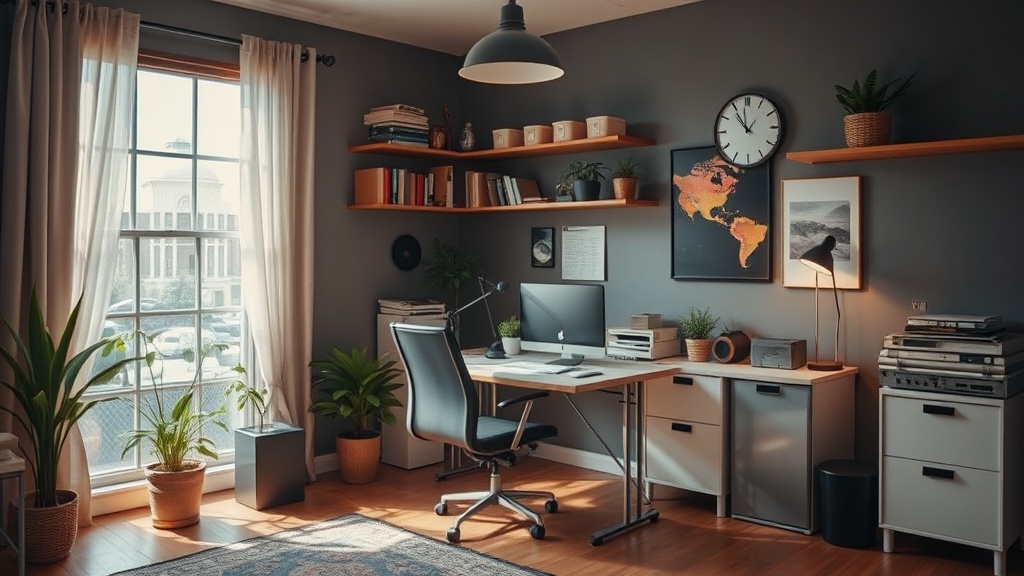
Imagine trying to work from home, surrounded by the remnants of breakfast, school projects, or last night's craft session. Your “office” is really just a corner of the living room, a slice of the dining table, or perhaps a glorified closet. This scenario is incredibly common, and it often leads to a tangled mess of papers, chargers, and half-finished tasks that compromise both productivity and peace of mind. This guide will walk you through actionable strategies for transforming even the most constrained areas into a focused, efficient home office that truly works for you—without expanding your footprint or buying a single piece of oversized furniture. We're going to explore how smart spatial planning, ingenious storage, and digital discipline can carve out a dedicated work zone, no matter how small your living situation.
How can you define a functional zone in a tiny office?
Even in a multi-purpose room, creating a distinct “work zone” is more about psychological boundaries and clever arrangement than physical walls. It's about signaling to yourself and others that this spot has a particular purpose during certain hours. Start by identifying the smallest viable footprint your work activities truly require. Is it just a laptop and a notebook? Or do you need space for a monitor, printer, and reference materials? Don’t just think about what you
might need; focus on what you
consistently use for core tasks. Once you’ve assessed your true needs, you can begin to delineate your area.
One incredibly effective technique is to use furniture placement. A small, purpose-built desk—perhaps a wall-mounted floating desk or a slim console table—pulled ever so slightly away from a wall, can create an illusion of separation. If possible, opt for a desk with a hutch or built-in shelving; this immediately provides vertical storage without taking up additional floor space. Consider its proportions carefully; an oversized desk in a small room can quickly make the whole area feel cramped. A carefully chosen chair, perhaps one that tucks completely under the desk when not in use, also helps maintain clear pathways.
Another trick is to use subtle visual cues. A small, textured rug beneath your desk can anchor the space and visually separate your work area from the rest of the room. Similarly, a strategically placed floor lamp or even a tall, leafy plant can serve as a soft, natural barrier. These simple visual cues—often overlooked—tell your brain (and anyone else in the household) that “this is where work happens,” helping you transition mentally into work mode.
Lighting serves as another powerful demarcation tool. A dedicated desk lamp can not only brighten your immediate work surface but also signals focus. It draws attention to your task, providing a concentrated pool of light that can make your corner feel like its own well-defined area. Task lighting improves visibility for intricate work and helps create a sense of enclosure and purpose within your designated workspace. Don't underestimate the power of a consistent backdrop either. If your workspace faces a wall, a simple bulletin board or a piece of inspiring art can define the zone and minimize visual distractions from the broader room, helping you stay focused on your tasks. (For more on creating an ergonomic setup, consider resources like