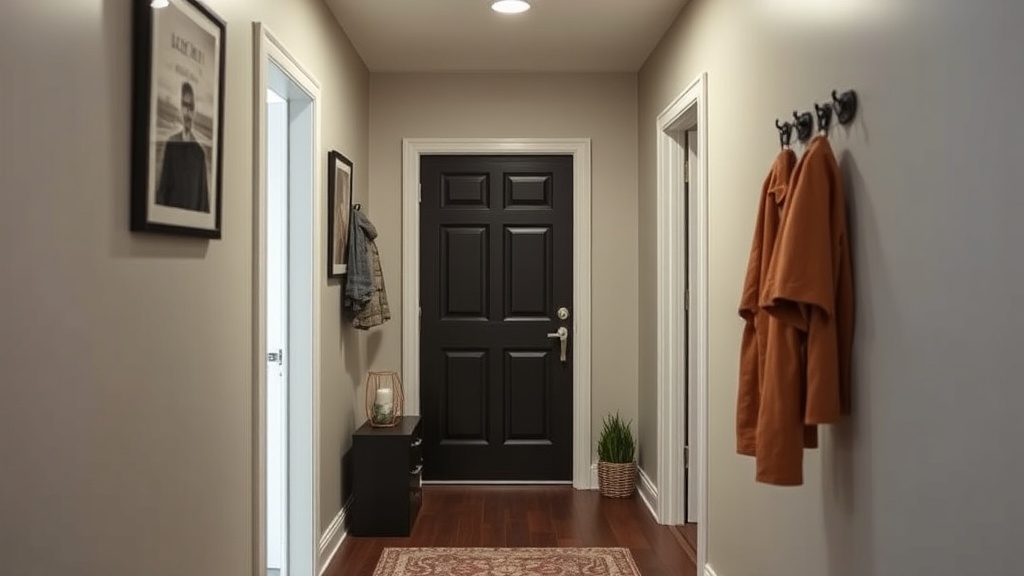
Can You Really Organize a Narrow Hallway Without Sacrificing Floor Space?

Here's something that might surprise you: the average hallway in a North American home—if you can even call it that—is just 36 inches wide. That's barely enough room for two people to pass each other sideways, yet these corridors often become dumping grounds for shoes, coats, bags, and mail. The result? A daily obstacle course between your front door and the rest of your home. This post tackles the overlooked challenge of hallway organization in tight quarters—because when every square foot counts, your corridor isn't just a path from room to room. It's prime real estate waiting for a purpose.
Why Do Narrow Hallways Become Clutter Magnets?
The psychology is simple—and frustrating. Hallways lack a defined function beyond circulation, which makes them vulnerable to "temporary" storage that somehow becomes permanent. You drop your keys "just for a second." Your jacket hangs on the railing overnight. Before you know it, you're weaving around a maze of footwear and dodging tote bags just to reach your living room.
There's also the lighting factor. Dim corridors feel less like intentional spaces and more like transitional voids—places where things disappear from consciousness. Research from Apartment Therapy confirms that poor lighting correlates directly with increased clutter accumulation in transitional spaces. When you can't see something clearly, you stop noticing it entirely.
But here's the real issue: most hallway organization advice assumes you have width to work with. Built-in mudroom benches. Freestanding console tables. Decorative shelving units. All lovely ideas—and all requiring at least 12 to 18 inches of depth that narrow hallways simply don't have.
What Storage Solutions Actually Work in Corridors Under 40 Inches Wide?
The answer isn't buying narrower furniture. It's rethinking what furniture means in these spaces entirely.
Wall-mounted systems are your best friend—but not the bulky kind. Think slim profile (under 4 inches deep), vertical orientation, and multi-functional design. A series of shallow floating shelves at varying heights can handle mail, small plants, and decorative objects without projecting into your walking path. Position them above eye level—roughly 66 to 72 inches from the floor—to keep the corridor feeling open while still providing accessible storage.
Over-the-door organizers aren't just for doors. Mount them directly to hallway walls using appropriate anchors, and suddenly you have pocket storage for gloves, scarves, dog leashes, and shopping bags. The key is choosing organizers with clear pockets (so you can see what's inside) and mounting them at a height that doesn't interfere with arm swing as you walk.
For shoe storage—the eternal hallway challenge—consider a tilted shoe rack rather than a traditional cabinet. These angled units hold footwear in a fraction of the depth, typically 6 to 8 inches versus 12 to 15 for standard cabinets. Better yet, they display shoes at an accessible angle that doesn't require crouching or digging. Bob Vila's comprehensive guide to shoe storage offers several tilted rack options specifically designed for tight spaces.
Don't overlook your ceiling, either. In especially narrow corridors (under 32 inches), traditional wall storage might still feel intrusive. A shallow shelf running along the ceiling perimeter—just 3 to 4 inches deep—creates display space for lightweight items, seasonal decor, or even books. It's unexpected, visually interesting, and completely out of your way.
How Can Lighting Transform Your Hallway's Functionality?
Remember that clutter-lighting connection? It works both ways. Strategic illumination doesn't just make your hallway safer—it creates the perception of space and intention that discourages mindless dumping.
Layered lighting is non-negotiable in narrow corridors. A single overhead fixture creates harsh shadows and dead zones. Instead, combine recessed ceiling lights (spaced every 4 to 5 feet) with wall sconces positioned at eye level. The sconces wash light across walls horizontally, visually expanding the space and highlighting any organizational systems you've installed.
Motion-sensor lighting serves a dual purpose. Practically, it ensures you never fumble for switches in a tight space. Psychologically, it creates a sense of arrival—your hallway lights up as you enter, signaling that this is a cared-for space deserving respect, not a dumping ground.
For very narrow passages (under 30 inches), consider LED strip lighting along baseboards. This "floating" illumination defines the walking path without taking up visual space. It also eliminates the shadows that make narrow hallways feel cave-like and forgotten.
One often-overlooked trick: mirror placement opposite your light sources. A mirror at the end of a hallway (or even along one wall) doubles the perceived width and amplifies available light. Just ensure the reflection is intentional—position mirrors to capture window light or attractive fixtures, not to multiply visual clutter.
Which Organizational Habits Make or Break Narrow Hallway Systems?
Even the best storage solutions fail without behavioral guardrails. The physics of narrow hallways are unforgiving—one misplaced bag creates a genuine bottleneck, not just an eyesore.
The "one-touch" rule is essential here. Everything in your hallway must have a designated home that requires exactly one action to return it there. Keys go directly on a hook—not on a tray where they can slide around. Coats hang immediately—no draping over chairs "just until later." The tighter your space, the less tolerance you have for intermediate storage steps that turn into permanent clutter.
Establish a weekly boundary reset—Sunday evening works well for most households. Walk your hallway with a laundry basket and remove anything that doesn't belong. Magazines that migrated from the living room. Shoes that never made it to bedrooms. The stray umbrella. This isn't deep cleaning—it's maintaining the circulation path that makes your home functional.
Consider seasonal rotation, too. Your hallway doesn't need to accommodate winter boots in July or beach bags in January. The Spruce's guide to small-space storage emphasizes the importance of off-site seasonal storage—whether that's under beds, on high closet shelves, or in a basement—to keep high-traffic areas functional year-round.
Finally, embrace the "hotel lobby" mindset. Hotel corridors stay clear because there's no alternative—guests need to pass. Treat your hallway with the same respect. Ask yourself: would a guest struggle to walk this path with a suitcase? If yes, your storage has overstepped its bounds.
How Do You Maintain Style in a Space That's Purely Functional?
Narrow hallways often feel like afterthoughts—white walls, overhead lighting, maybe a framed print if you're feeling fancy. But treating these spaces as design opportunities rather than mere circulation paths actually reinforces their organization.
Color creates intention. A bold paint color or wallpaper pattern signals that this space matters. Dark colors actually work well in narrow corridors—they recede visually, making walls feel farther apart than they are. Just ensure your lighting is adequate to prevent the cave effect mentioned earlier.
Vertical rhythm draws the eye upward, emphasizing height over narrowness. Install hooks or shelves in deliberate patterns rather than random arrangements. Alternate textures—wood, metal, fabric—to create visual interest without physical bulk.
Plants in narrow hallways? Absolutely—but choose wisely. Trailing varieties (pothos, philodendron) mounted high create green curtains that don't consume floor space. Small succulents on shallow shelves add life without maintenance demands. Avoid anything that projects more than 6 inches from the wall or requires frequent watering (spills in tight spaces are disasters).
The ultimate style secret for narrow hallways, though, is negative space. Resist the urge to fill every inch with storage. A deliberately empty stretch of wall—perhaps with a single piece of art—creates breathing room that makes the organized sections feel intentional rather than desperate. It's the difference between a curated corridor and a cluttered one.
Your hallway doesn't need to be a grand gallery. But it does need to function as more than a junk drawer you walk through. With the right combination of slim storage, strategic lighting, and disciplined habits, even the narrowest corridor can become an organized, welcoming threshold to the rest of your home.